The WhatsApp campaigns that convert for Shopify stores are not clever one-offs. They are a handful of repeatable patterns, each one fired by something a customer just did — walked away from a checkout, ran out of a product, waited for a restock — and each one landing in a conversation the customer already agreed to. Below are seven patterns, who each one goes to, and the conversion band Keaz accounts typically see.
- Cart recovery is the highest converter at 18–30%, and makes up roughly 40% of WhatsApp revenue in a typical Keaz account.
- Back-in-stock runs at 25–40% because it messages the highest-intent audience you have: people who already tried to buy.
- On the customers your email already reaches, adding WhatsApp moves conversion from 2.1% to 4.5% — roughly 1.5× — so the two channels stack rather than compete.
What makes a WhatsApp campaign convert?
Three things, in this order: how many customers you can reach, how well the send is timed, and how tightly it is targeted. Get those right and ordinary campaigns convert. Get them wrong and clever copy will not save the send.
Reach comes first. Customer Contact Coverage (CCC) is the share of your last-12-months Shopify customers you can actually reach on WhatsApp — the ones with a phone number on file. Most stores start somewhere between 35% and 55%. Keaz accounts typically get to 85%+ within about 60 days. A campaign that converts at 25% on 40% coverage earns less than the same campaign at 15% on 85%.
Timing is second. Each pattern below hangs on something the customer did, or on where they are in their buying cycle — not on a content calendar. Which events can start a flow, and how the Starting point decides who enters it, is documented in the Flows overview in the help center.
Targeting is third. Send to a segment, not to everyone. And every pattern here assumes an explicit, documented, revocable opt-in — that is the floor, not an optimisation.
One published-benchmark band worth keeping in view: WhatsApp read rates run above 90% against email open rates of 30–40%. That is a labelled band rather than a measurement of your store — how we treat bands like it is set out in how the Forecast is calculated. For the wider picture of the channel, see our complete guide to WhatsApp marketing for Shopify.
Which seven WhatsApp campaigns convert best?
Each pattern below is a flow you can edit rather than build. The bands are what Keaz accounts typically see, not a promise for your store.
- Cart recovery. Runs on the abandoned-checkout trigger: a contact begins a checkout and does not complete it. The highest-converting pattern at 18–30%, and roughly 40% of WhatsApp revenue in a typical account — unsurprising when cart abandonment across online retail averages around 70%, per Baymard Institute's cart-abandonment research. Walkthrough: WhatsApp cart recovery for Shopify.
- Back-in-stock. Goes to customers who wanted a product that is available again. 25–40% — the highest-intent audience in the store. One Keaz customer, Mira, Head of Growth at a €1.8M/year fashion DTC brand, puts it plainly: "Back-in-stock on WhatsApp converts at 30%. That number doesn't exist anywhere else."
- Re-order reminder. Lands near a customer's typical reorder cycle. 12–22%, and about 32% of buyers re-order when they are nudged at the right point in that cycle. Strongest in consumables — pet, beauty, food and beverage. See turning one order into three.
- Winback. Aimed at customers with no order in 90+ days. 3–7% reactivation. A low band on a large audience, which is why it is still worth running.
- Birthday and VIP. Goes out around a customer's birthday, or on VIP status. 14–22% on send, and the easiest campaign to justify to a sceptical founder because the audience is tiny and the response is immediate.
- Launch campaign. A one-shot send you trigger yourself, going to your email list and inviting them onto WhatsApp. It needs an email tool connected, and it carries a built-in 90-day cooldown so the list does not get worn out. It is often the single largest contributor to a month's WhatsApp revenue.
- Post-purchase and review request. Follows the order, with the review ask after a delay. Post-purchase lifts repeat purchase rate by 10–15%; the review request pays back indirectly, in social proof. The full set of flow templates is on the features page.
How much do these campaigns convert by industry?
The same pattern converts differently depending on what you sell. These are first-90-days ranges, and they move with your starting coverage and your average order value.
- Pet: 16% welcome-to-buy, 30% cart recovery. Re-order reminder is the strongest flow.
- Beauty and cosmetics: 14% welcome-to-buy, 26% cart recovery. Cart recovery plus re-order.
- Health and wellness: 13% welcome-to-buy, 24% cart recovery. Re-order plus winback.
- Food and beverage: 13% welcome-to-buy, 20% cart recovery. Re-order reminder leads.
- Fashion and apparel: 10% welcome-to-buy, 22% cart recovery. Cart recovery leads.
- Home and living: 9% welcome-to-buy, 20% cart recovery. Cart recovery leads.
- Electronics: 7% welcome-to-buy, 18% cart recovery. Post-purchase and review request lead.
The per-vertical picture, including which flow to start with, is on the industries page. A published-benchmark band for the whole programme: mature WhatsApp programmes tend to add 6–18% of annual revenue. Again a band, and again the reasoning is in how the Forecast is calculated.
How do you build these campaigns in your own store?
- Connect Shopify. Keaz pulls in 12 months of customers, orders and abandoned checkouts. Setup runs about 15 minutes, no code.
- Read your CCC on the dashboard before you launch anything. Below roughly 60%, fix coverage first — turning on the phone field at checkout and encouraging it moves capture from about 22% to 65–70%, which is the single biggest lever available to most stores.
- Switch on cart recovery. One trigger, the highest band, and it starts earning inside a week.
- Add back-in-stock and the re-order reminder next. Both work off data Shopify already has, so neither needs new content from you.
- Attribute before you scale. Give each flow its own discount code so revenue lands against the campaign that earned it — the mechanics are in revenue tracking: one discount code per flow. A campaign you cannot attribute is a campaign you cannot defend.
Common mistakes
- Sending to the list instead of the segment. The list is who you can reach. The segment is who should hear this particular message. Conflating them is the fastest way to train customers to mute you.
- Launching campaigns before fixing coverage. Doubling your conversion rate on 40% coverage earns less than leaving the rate alone and getting to 85%.
- Reusing the email calendar. Email campaigns are planned by date. These campaigns are fired by events. A WhatsApp send scheduled for Tuesday because Tuesday was free is a WhatsApp send with no reason behind it.
- Running without attribution. Without one discount code per flow you will have opinions about which campaign worked, not evidence.
- Treating WhatsApp as an email replacement. Across our own audience data, 24% of customers are reachable by email only, 38% by both, 34% by WhatsApp only and 3% by neither. About a third are reachable on WhatsApp and nowhere else — which is the argument for running both, not for switching.
- Writing at email length. These land in a chat thread between a message from a friend and one from a delivery driver. One ask per message, and it has to make sense on a phone screen without scrolling. A newsletter pasted into WhatsApp reads as an intrusion.
The stores that make WhatsApp work are not the ones with the best copy. They are the ones running a small set of event-triggered campaigns against a reachable audience, and measuring each one separately. Start with cart recovery, fix coverage while it runs, and add back-in-stock and the re-order reminder once attribution is in place.
If you want to see what these patterns are worth against your own Shopify numbers rather than a benchmark table, calculate your Forecast.
This is a summary rather than legal advice. Have your own counsel review how you collect and document opt-in before you send.
Frequently asked questions
Which WhatsApp campaign should I run first?
How many of these can I run at the same time?
Do I need an email tool for these?
How do I know a campaign actually made money?
Do customers have to opt in?
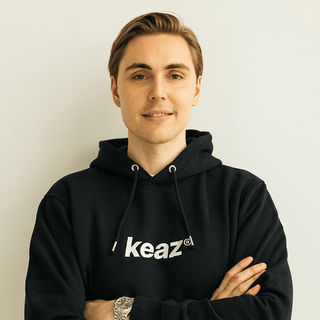
Nils Spölgen
Founder at Keaz. Serial founder in chat marketing — built a local agency into Keaz, the WhatsApp marketing platform for Shopify. Bootstrapped the MVP, raised funding, and scaled to 200+ merchants in DACH. Writes about flows, opt-in & GDPR, Klaviyo, and realistic revenue benchmarks — prefers conservative math over impressive claims. View profile